
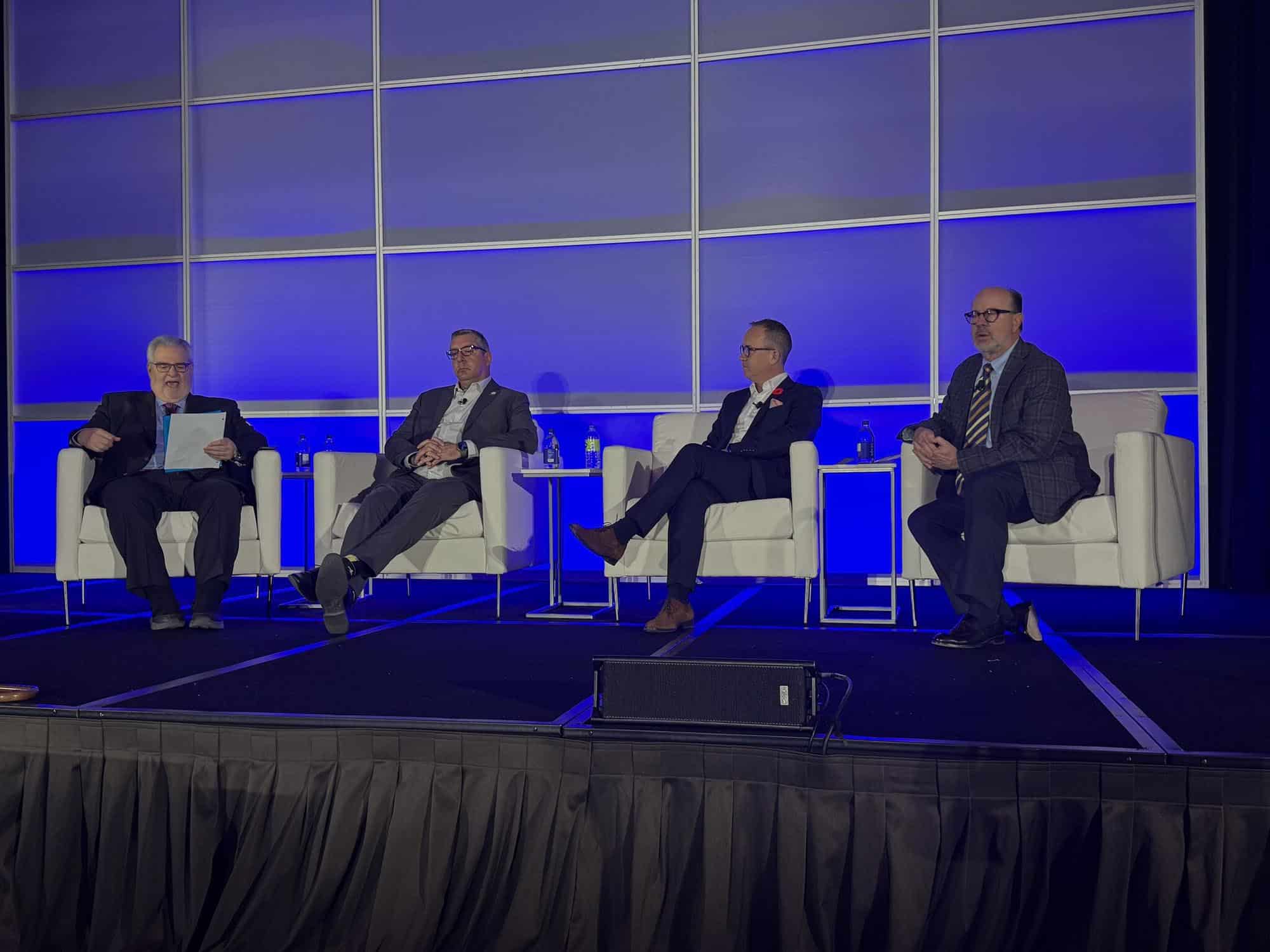
Pictured (left to right): William Gottlieb, Director – Eastern Canada, ITN Logistics Group; Brad Elias, Director – Air Service and Cargo, Winnipeg Airports Authority; Matthieu Casey, Managing Director (Commercial Branch Cargo Division), Air Canada; and Brandon Fried, Executive Director, Airforwarders Association.
Speaking at the CIFFA Annual Conference in Toronto, Executive Director Brandon Fried said new U.S. import tariffs would increase supply chain costs, slow recovery, and undermine global trade stability
Toronto, Canada, Wednesday 29th October 2025: The Airforwarders Association (AfA) has warned that the United States’ decision to impose an additional ten percent tariff on imported Canadian goods will drive up costs across the supply chain.
Addressing delegates at the Canadian International Freight Forwarders Association (CIFFA) Annual Conference in Toronto, Canada, AfA Executive Director, Brandon Fried, said the measure would “punish American businesses and consumers more than it protects them,” calling for a pause on escalating trade barriers.
“Tariffs don’t build resilience; they build cost,” said Fried.
“Every additional charge ripples through the supply chain, from warehouse floors to retail shelves.
“To encourage growth, we need smarter policy and more cooperation, not higher walls.”
Fried said higher tariffs risk derailing recent progress in restoring air cargo capacity, and urged policymakers to focus on predictable trade conditions that support long-term investment.
He also pointed to the role of innovation and infrastructure in sustaining growth.
“Artificial Intelligence is reshaping logistics, from forecasting to security screening,” added Fried.
“But its full potential depends on better data sharing between airlines, forwarders, and airports, with delivery of initiatives like the International Air Transport Association’s ONE Record being key.”
Fried added that Canada’s airports need greater investment in cargo infrastructure, calling it “a shared responsibility, with the industry leading on operations, and government supporting capital improvements.”
The CIFFA Conference takes place October 29-30 at the Delta Hotels Toronto Airport and Conference Centre.
About the Airforwarders Association
The Airforwarders Association (AfA) represents hundreds of U.S companies dedicated to moving cargo through the supply chain on all modes of transport.
AfA has been supporting member companies of all sizes for 35 years, acting as the voice of the industry and lobbying legislators to help drive sustainable practices and ensure resilient, safe, secure supply chains.
As an alliance of indirect air carriers, cargo airlines and related businesses operating across the global transportation community, we represent member companies dedicated to moving air cargo through the supply chain.
Our members include not only air forwarders, but truckers, airlines, warehouse operators and businesses delivering a range of supporting services including technology, training, compliance, insurance and legal, just to name a few industries.
From campaigning for better national infrastructure to opening discussions about carbon reductions and digitilization – AfA has promoted hundreds of its members and streamlined business models to continue the growing industry.
More information at airforwarders.org/